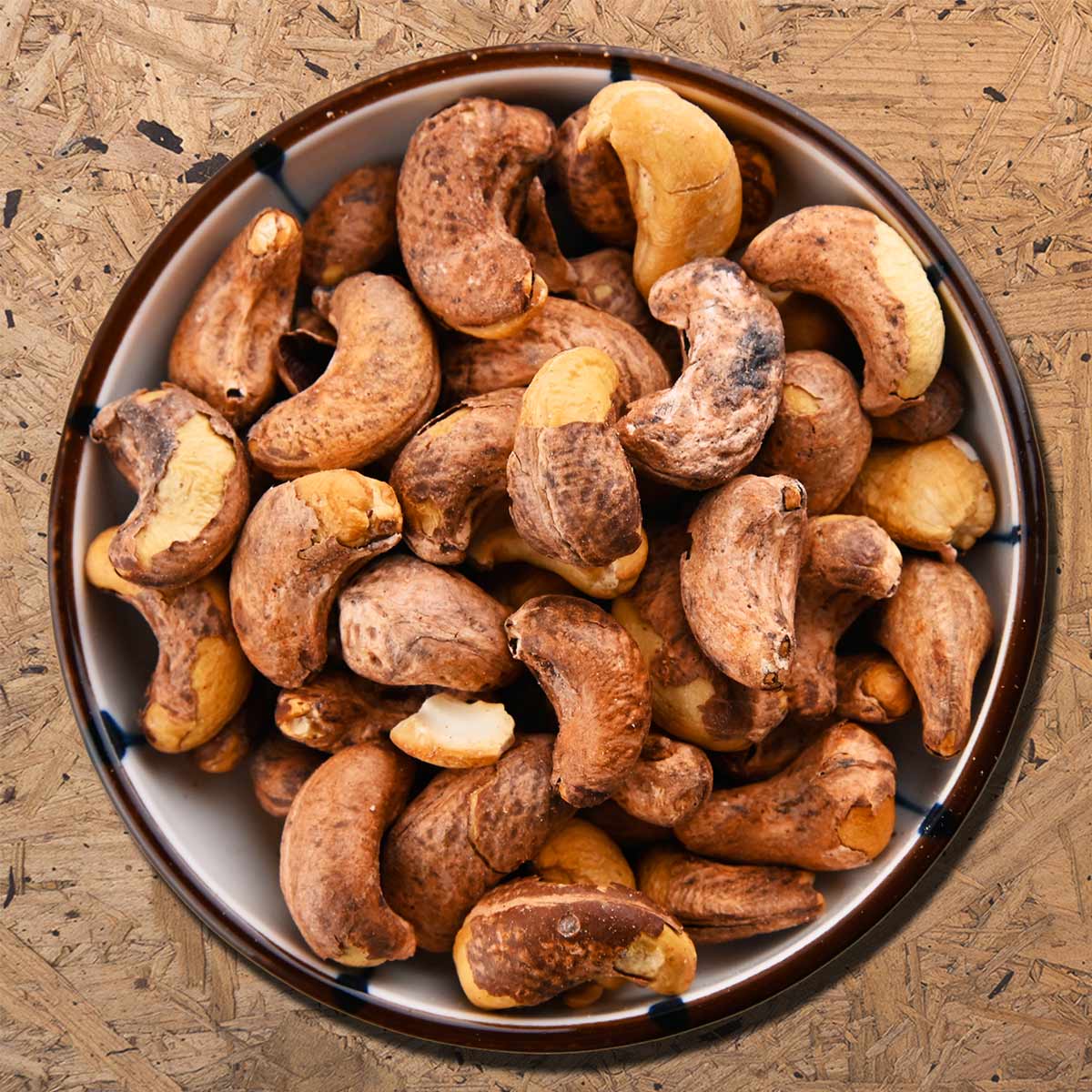
Physical Appearance:
Shape: Kidney-shaped or curved.
Color: Light beige to pale brown.
Texture: Smooth, with a firm but creamy texture when eaten.
Forms:
Whole Nuts: Typically sold raw or roasted.
Pieces: Used in cooking and baking.
Powder: Ground into a fine powder for use in recipes.
Butter: Processed into a creamy spread.
Culinary Uses:
Snacks: Eaten raw, roasted, salted, or sweetened.
Cooking: Used in various dishes, including stir-fries, salads, and desserts.
Nut Butter: Processed into a creamy spread.
Dairy Alternatives: Used to make cashew milk and cheese substitutes.
Baking: Incorporated into cookies, cakes, and other baked goods.
Industrial:
Cosmetics: Cashew oil is used in skincare products.
Adhesives and Resins: Cashew shell oil is used in industrial applications.
Quality Parameters
Size: Varies by grade, with larger nuts typically being more expensive.
Color: Uniform light beige to pale brown, free from dark spots.
Texture: Smooth and firm, not rubbery or oily.
Flavor: Rich, creamy, and slightly sweet.
Grades and Standards
W-180: King of Cashews, highest grade, large size.
W-210: Jumbo size.
W-240: Large size, very popular.
W-320: Most popular and widely available grade.
W-450: Smallest white whole kernels, more affordable.
Cashew nuts are a versatile and nutritious food that offers a range of culinary and industrial uses. Their rich flavor, coupled with their health benefits, makes them a popular choice around the world.