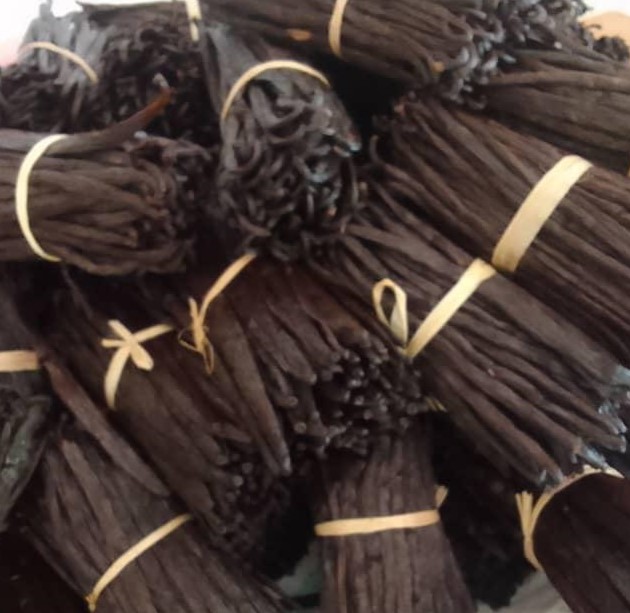
Physical Appearance:
Vanilla Beans: Long, thin pods, typically dark brown to black, filled with tiny seeds.
Vanilla Extract: Liquid form made by macerating and percolating vanilla beans in a solution of ethanol and water.
Aroma and Flavor:
Aroma: Sweet, floral, and creamy with a complex, rich fragrance.
Flavor: Sweet, creamy, and slightly woody with a hint of spice.
Types of Vanilla
Madagascar Bourbon Vanilla: Rich and creamy flavor and they are the most common and widely used variety.
Mexican Vanilla: Smooth, spicy, and woody flavor, and they often have a richer, more complex taste compared to other types.
Tahitian Vanilla: Floral and fruity flavor. Known for its unique, exotic aroma.
Indian Vanilla: Rich and bold flavor. Grown in the regions of Kerala, Karnataka, and Tamil Nadu.
Uses and Applications
Culinary:
Baking: Used in cakes, cookies, pastries, and bread.
Desserts: Essential in ice creams, custards, puddings, and frostings.
Beverages: Adds flavor to coffee, tea, and alcoholic drinks like vanilla liqueur.
Savory Dishes: Used in some meat and vegetable recipes for a unique flavor twist.
Non-Culinary:
Perfumery: Used in perfumes and fragrances for its sweet and soothing scent.
Cosmetics: Added to lotions, creams, and other beauty products.
Aromatherapy: Used in essential oils and candles for relaxation and stress relief.
Quality Parameters
Appearance: Pods should be pliable, moist, and glossy without any signs of mold or dryness.
Aroma: Strong, sweet, and pleasant, indicating high vanillin content.
Flavor: Rich, creamy, and complex without any bitterness or off-flavors.
Length of Beans: Typically 15-20 cm for premium quality beans.
Vanilla is a versatile and beloved flavoring with a wide range of culinary and non-culinary applications. Its sweet, rich flavor and soothing aroma make it a valuable ingredient in many dishes and products around the world.